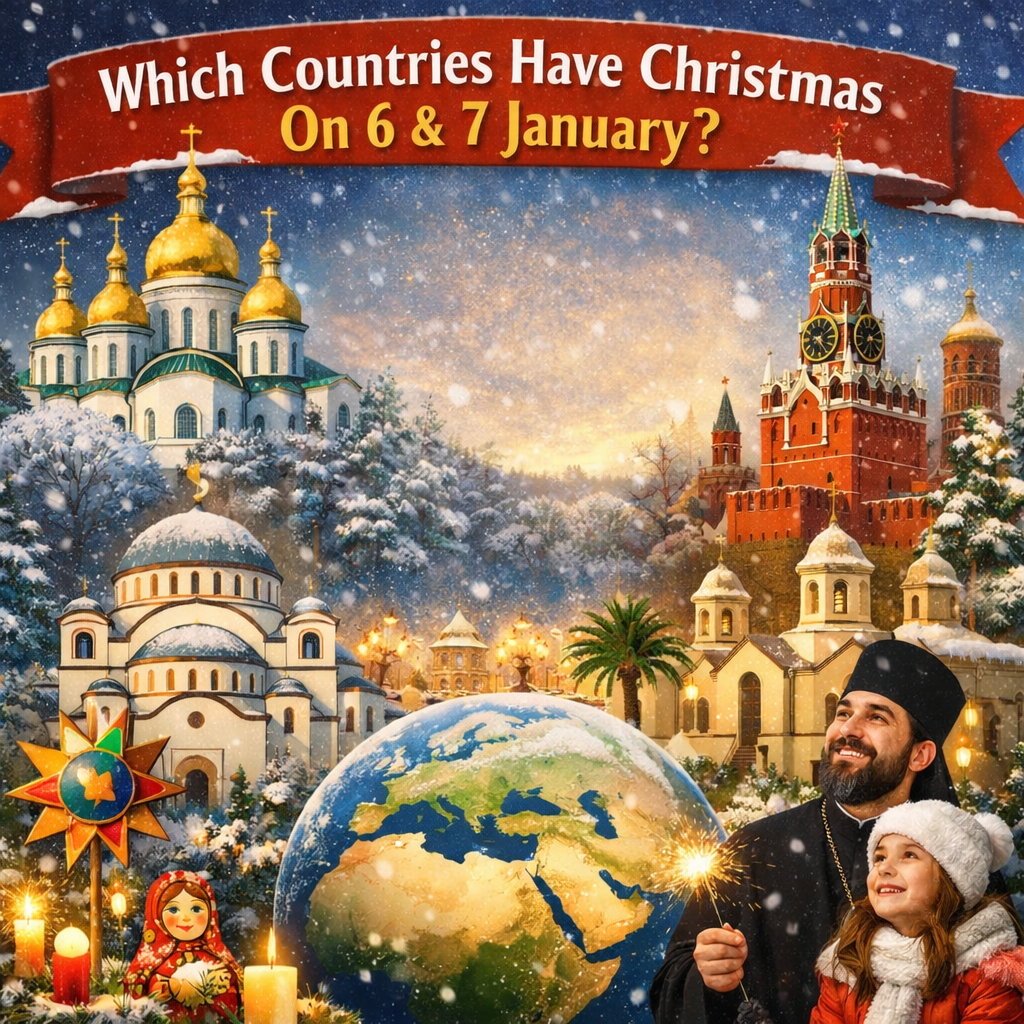
Most countries return to their routine work once the fun of the winter holiday is over. But some countries celebrate Christmas in January. In some countries, according to the Julian calendar, Christmas Day falls two weeks later than in the rest of the world. Christmas is one of the most popular religious celebrations, and people around the globe celebrate it with their unique traditions. At the same time, most countries follow the Gregorian calendar to celebrate the birth of Jesus on December 25. This festival brings families together and offers an excellent opportunity to exchange gifts and enjoy this beautiful time together.
Why Are the Celebration Dates Different?
The Julian calendar was introduced by Julius Caesar in 45 BC to fix problems in the Roman calendar. It was based on the solar year but slightly underestimated its length. Later, in 1582, Pope Gregory XIII introduced the Gregorian calendar to correct this error. Because of the way leap years are counted, the two calendars slowly drifted apart.
Today, the Julian calendar is about 13 days behind the Gregorian calendar. Many Orthodox Christian churches still follow the Julian calendar for religious events. Because of this, Christmas on December 25 (Julian calendar) now falls on January 7 in the modern calendar. Catholic and most Protestant churches accepted the new calendar, but Orthodox churches kept the old one due to tradition and belief.
Top Countries That Celebrate Christmas in January
If you love festive traditions, you can enjoy Christmas twice, once at home in December and again in January by visiting these countries.
Russia- January 7
Back in the Soviet days, Russians didn’t really celebrate Christmas openly. But since the Soviet Union fell apart in 1991, the Orthodox faith has made a big comeback, and Christmas has returned to the scene. However, because of those old restrictions, New Years is still a much bigger deal than Christmas. When it comes to traditions, Russian Christmas has some fascinating customs that go back a long way.
People fast on Christmas Eve and then break it when the first star shows up in the sky. On Christmas Day itself, families gather for a feast that includes hearty roast meats, stuffed dumplings (called pierogi), and gingerbread for dessert. Instead of Santa Claus, kids look forward to Grandfather Frost, who brings gifts on New Year’s rather than Christmas.
Georgia- January 7
Georgia celebrates Christmas on January 7 according to the Julian calendar. The celebration, which starts the night of January 6, often involves attending late-night church services until early morning at 4 am. You can join the traditional Alilo parade, a large, joyful Christmas procession in which some people dress in traditional robes or as shepherds and angels, walking through the city streets singing carols. They collect food and gifts that are later distributed to orphanages and the poor.
Many homes display a Chichilaki instead of a traditional Christmas pine tree, a unique Christmas tree made from the shaved branches of a hazelnut or walnut tree. This tree is decorated with small fruits and sweets and, according to tradition, is burned on January 19, which symbolizes leaving behind past troubles. Additionally, on Christmas night, families lit candles in their windows, symbolizing the welcome of the birth of Jesus into their home and the world.
Kazakhstan- January 7
Kazakhstan is a major Muslim country. This is why Christmas isn't a big national holiday; Christians, mostly Orthodox, celebrate it on January 7. Some Kazakh Christians start fasting for 40 days beforehand, including abstaining from meat and other foods, until the first star appears on January 6.
The festive meal features sochivo, a sweet grain dish, and traditional Kazakh dishes like plov (rice pilaf). Their cultural traditions include mummers' performances, caroling, and fortune-telling, which are common during the 12 days of Christmas. Overall, you can expect a mix of Russian Orthodox rituals, Kazakh folk customs, and modern, globalized festivities.
Armenia- January 6
Armenia celebrates Christmas on January 6 and is one of the oldest Christian countries in the world. On Christmas Eve, families light candles to represent the light Jesus brought into the world. Holy water is used to bless homes and people, and some even wash their hands or face with it for healing.
The festive meal usually includes trout, spiced rice, nuts, and dried fruits. January 7 is a remembrance day. Families visit the graves of loved ones with flowers and offerings, then return home to share stories and memories.
Ethiopia- January 6
Ethiopia is another country where Orthodox Christianity plays a significant role. Christmas here has ancient traditions, and one of the best places to experience them is Lalibela, famous for its rock-hewn churches carved into the rock. Pilgrims travel for days to reach the holy town.
On Christmas Eve, on January 6, the area fills with white-robed worshippers who pray, chant, and celebrate through the night. The celebrations end at sunrise on January 7, when pilgrims slowly return home to continue the festive spirit with family and community.
Final Thoughts
Celebrating Christmas in January gives you a second chance to enjoy the festive season. These countries offer rich traditions, deep culture, and unforgettable experiences. If you love travel and celebrations, a January Christmas trip can be truly magical and memorable.
-
Share With
-

-

-

-

-